

2025 Honor Award Winners
Congratulations to the 2025 Honor Award for Washington Architecture Projects!
- Alan Organschi | GOA Architecture
- Armida Fernández | Estudio ALA
- Nader Tehrani | NADAAA
- with Lauren Gallow as moderator
From 109 submissions, the jury chose 18 award winners from three submission categories – Built, Conceptual, and Research & Innovation.
The jury was impressed with our design community’s deep consideration for building in a natural context, and how each submitted project had a unique perspective to share on the region and culture. They appreciated how these projects were not only crafted and finished beautifully with deep relation to their site, but embody the transformative power of design through producing new kinds of knowledge, helping us better understand our communities, sense of place, and environment. Through demanding discourse and deeper dialogue, our design community deeply impacts a broad range of people and sets a strong example for cities everywhere, creating innovative design solutions that pave a way forward.
In addition to the main juried awards, it was the eighth year of the Young Voices Selection (YVS), a program with the aim to engage and elevate the voices of young designers through direct participation and representation in the Honor Awards. The three YVS panelists, Erin Wong (Mithun), Jarin Khan (Arete Architecture), and Jeremy McGlone (GO’C) selected 1 Built Project as the Young Voices Selection winner.
Congratulations to all the winners, and thank you to our esteemed jury, moderator, and Honor Awards Committee! All of this would not have been possible without you.
Visit the Online Gallery to learn more about the projects, as well as project team and collaborator information. Missed the live show? You can catch the replay here.
Award of Honor
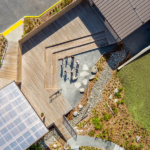
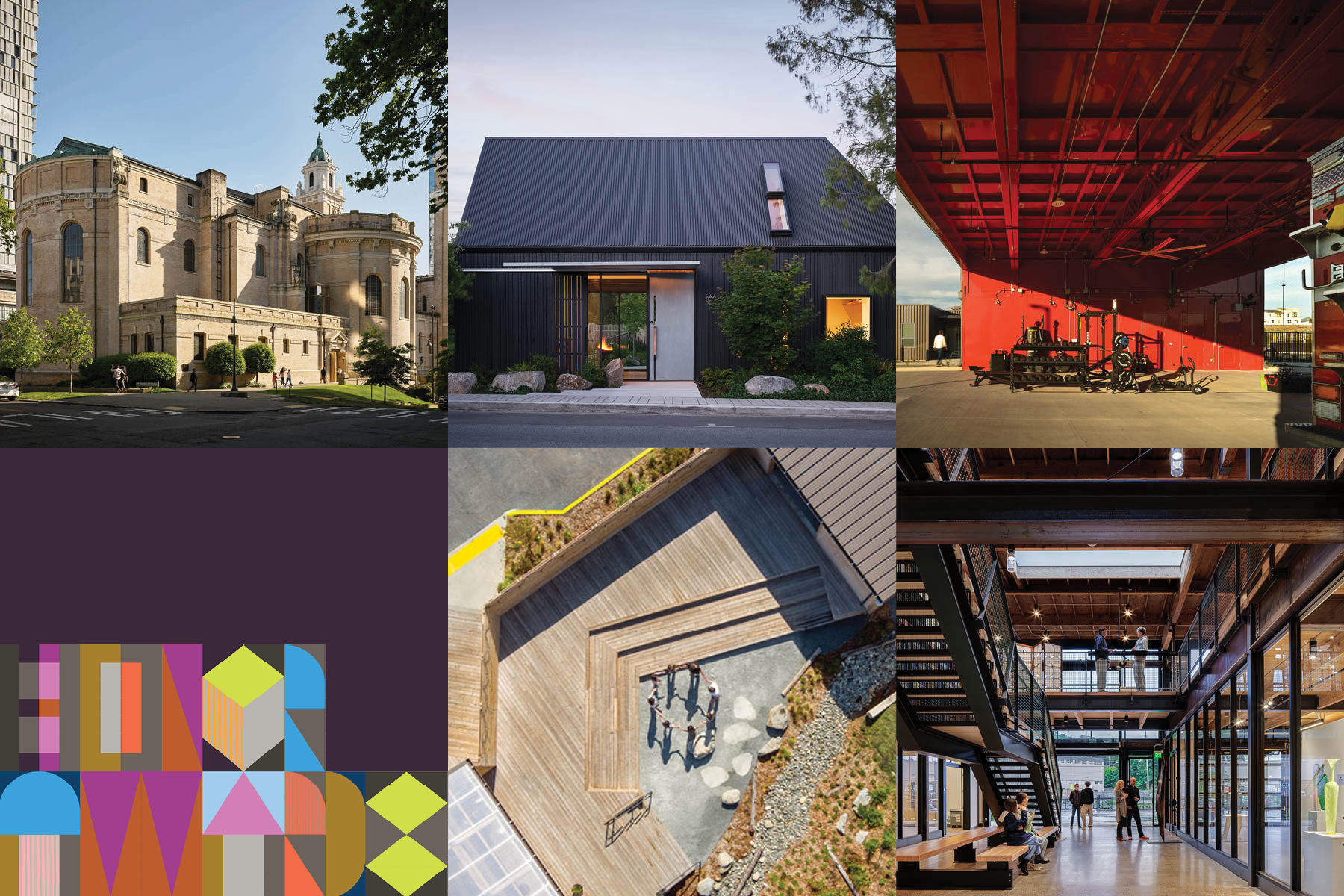
Snoqualmie Tribe Child Development Center by Boulder Associates is a educational and cultural center on the sovereign land of the Snoqualmie Tribe. The jury celebrated this project’s intentionality and big impacts through simple, clear but inventive forms to connect with the cultural community and the landscape. Even though it is a small intervention, it has a thoughtful relationship to all the elements, namely the street and garden, and is transforming a larger building complex in inventive ways with its simple forms and reinterpretation of construction systems in a contemporary way. Photo by Andrew Storey
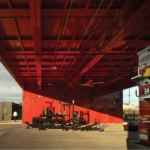
Modular Fire Station 67 by Wittman Estes is a prefabricated modular fire station designed for reuse and resilience and built for rapid assembly. The jury appreciated this project for its modular ecological considerations, production possibilities, thoughtfulness around a building’s afterlife and how that can be adapted to civic buildings, especially one with extensive span dimensions such as this. They appreciated how it brings up promise and opportunity for us all to rethink civic typologies and their full cycle of assembly to disassembly. Photo by Nic Lehoux
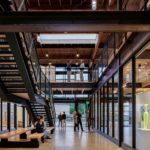
West Canal Yards by Graham Baba Architects is adaptive reuse of a 9-acre industrial fish processing facility in Seattle. The jury thought this was a great project and building solution to imagine a new use and salvage of a previously unloved building. They celebrated the promenade reclaiming the canal waterfront in a new way for the city and how it shows us a future of rebuilt, love of abandoned history, and a promise of ways to adapt, transform and evolve our community’s urbanism. Photo by Ed Sozinho
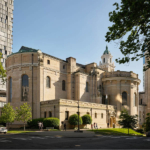
Saint James Cathedral Portico by Gerrick Office is an entry vestibule renovation to a Cathedral including entry doors, light monitor and holy water stoup. The jury appreciated how this project thoughtfully resolves a complex urban condition of multiple entries in steep urban typography and creating a main accessible and dignified space to enter. The jury celebrated the small but powerful moves, tactile materials and beautiful effect of light that creates a space that is a spiritual intervention. Photo by Kevin Scott
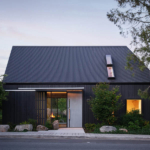
iolair by GO’C is a newly founded artist residency program and building on Orcas Island. The jury celebrated this project for its relationship between plan and section, and the deft, rich, precise form that was created inside and in its relationship to the outside as well. A small, efficient, elegant project that lends promise for designing on increasingly smaller sites, and asks the important question of: how do you design for a collection of events vs. collection of things? Photo by Kevin Scott
Energy in Design Award
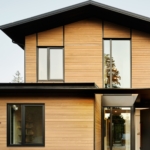
Aro Homes by Olson Kundig is a versatile, repeatable, ultra-low carbon, and better than net-zero reimagined modular spec-built housing. The jury valued this project’s place in ongoing research of ways to fit high-performance and modularity into traditional neighborhoods. Photo by Matthew Millman
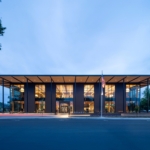
Deschutes County Redmond Library by The Miller Hull Partnership, LLP is a Civic Library for Redmond, Oregon. The jury appreciated this intuitively and beautifully designed strong civic project that happens to also have incredible energy performance integrated with relative design restraint. Photo by Lara Swimmer/Esto
Special thanks to the University of Washington Integrated Design Lab (IDL) and sponsor BetterBricks for their partnership on the Energy in Design Award.
Award of Merit
Memory Landscapes by Robert Hutchison Architecture (Conceptual)
Hudson Cloverleafs by Tsuga Studio
State Street Apartments by PUBLIC47 Architects
Whidbey Puzzle Prefab by Wittman Estes
FORM FOLLOWS FIBER | Designing for and after Disassembly by atelierjones LLC (Research & Innovation)
Reframe Residence by Studio PHH Architecture
The Loyal Captain by Heliotrope Architects
Washington School for the Deaf Divine Academic and Hunter Gymnasium by Mithun
Honorable Mention
Hinoki @ Yesler Terrace by HEWITT & PYATOK architecture + urban design
Hillclimb by Workshop AD (Conceptual)
Ceramics Studio by GO’C
Young Voices Selection
Station Space by Side x Side Architects