

2026 Housing Design Forum | Getting to Abundance: Unlocking the Future of Housing
The 2026 Housing Design Forum, Getting to Abundance: Unlocking the Future of Housing, will examine how we can continue to promote a future of abundant, high-quality, diverse, and sustainable housing options in Seattle and beyond.
In recent years, Washington State has enacted a series of consequential housing reforms, including middle housing legislation, an ambitious transit-oriented development (TOD) bill, and a range of technical measures aimed at accelerating housing delivery and increasing production. At the same time, the housing sector faces real constraints: a volatile economic environment, rising construction costs, and persistent uncertainty. Still, a growing consensus has emerged around the importance of plentiful housing in our communities.
This program will explore the intersection of housing policy, design, and delivery, with a focus on the architectural implications of this moment. Sessions will feature local housing leaders discussing recent policy advances, ongoing debates, and unresolved challenges. We will examine how regulatory reform and alternative construction methods can unlock new design possibilities, improve livability, and support more flexible and efficient housing types. Through case studies, we will highlight innovative housing models that foster community through intentional design and development approaches.
Together, these conversations will equip participants with a clearer understanding of the tools, constraints, and opportunities shaping the next generation of housing.
Join us for Getting to Abundance: Unlocking the Future of Housing on Monday, June 1, 2026 at the National Nordic Museum in Seattle (8 LU/HSW).
NOTE: Participants must attend the full forum to receive continuing education credit or a certificate of completion. No partial credit will be awarded for participants who attend only a portion of the forum. All registration and credit questions can be directed to Pamela Tagata.
Featuring Opening Remarks by Mayor Katie B. Wilson
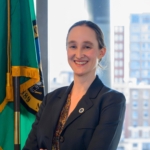
Mayor Katie B. Wilson, City of Seattle
Katie B. Wilson is the Mayor of Seattle, taking office in January 2026. A longtime transit advocate and community organizer, Wilson co-founded the Transit Riders Union and then led the organization for over a decade, during which time she had extraordinary success building coalitions to win better transit, affordable fares, higher wages, stronger renter protections, and new progressive revenue. Wilson approaches the role of Mayor from the perspective of a coalition builder and has assembled a diverse and experienced team ready to deliver responsible, effective governance and make progress on our city’s biggest challenges. She rents an apartment in Capitol Hill which she shares with her husband and young daughter.
Session 1 | The Housing Landscape: Putting Policy into Practice
Liz Pisciotta, AIA is a licensed architect and partner at Neiman Taber Architects. Her practice and volunteer work is animated by the belief that
all users deserve to feel pride in their spaces, no matter the budget. In school and in practice, Liz has consistently employed an interdisciplinary approach, integrating anthropology, art, urban design, interior design and architecture. She has applied this diverse training across scales and typologies, including
retail, commercial, and institutional projects, in addition to the residential design that is central to
Neiman Taber’s work. Liz is attracted to designing third places, the social spaces that are distinct from work and home — and also the effective blending of all three together. When Liz is designing, “I imagine the stories of the people that will eventually inhabit these spaces…Who will they say ‘hi’ to, what will they be carrying and how can I support that?” Recent projects have received accolades from the AIA Seattle Honor Awards and IIDA InAwards. Liz serves on the AIA Seattle Housing Advocacy Committee and Public Policy Board; she served on the Housing Design Forum Planning Task Force 2021-2025. Liz is also passionate about volunteering for the Friends of Hawthorne Elementary School PTA and was recently the president for several years of the Columbia City neighborhood mutual aid group, Good Friends childcare co-op. She lives in Columbia City with her husband, two daughters and their pug.
Councilmember Eddie Lin brings to the council an extensive law background. He is the son of a Taiwan immigrant and mixed race couple who grew up in the South. Councilmember Lin settled in Seattle after attending law school at Seattle University. After falling in love with the area. He joined the City Attorney’s Office in 2017 and has worked directly with the Office of Housing to help make unprecedented investments in rental and homeownership projects across Seattle. A Seattle Public Schools parent since 2009, he is married to a proud educator and local union leader. District 2 includes the neighborhoods of Beacon Hill, Rainier Valley, Chinatown-International District, Columbia City, Mount Baker, Yesler Terrace, and Rainier Beach.
Gregg Colburn is the Marsha and Jay Glazer Endowed University Professor and Associate Professor in the Runstad Department of Real Estate
in the College of Built Environments at the University of Washington. He publishes research on topics related to housing and homelessness and is co-author of the book, Homelessness is a Housing Problem: How Structural Factors Explain U.S. Patterns. Gregg is also co-author of the recently released book, Affordable Housing in the United States. His research has been featured in leading media outlets, including The Atlantic, The New York Times, The Economist, Bloomberg, and National Public Radio. Gregg holds an M.B.A. from Northwestern University, and a M.S.W. and Ph.D. from the University of Minnesota. Prior to academia, he worked as an investment banker and private equity professional. At the University of Washington, Gregg teaches classes in housing, urban economics, and finance. Gregg serves as co-chair of the University of Washington’s Homelessness Research Initiative and is a member of the National Alliance to End Homelessness Research Council.
As Executive Director, Patience leads the association in a shared effort to increase access to affordable housing. She is recognized for her leadership in addressing the intersecting crises of affordable housing, racial equity, and climate change and is the 2020 Bullitt Foundation Environmental Fellowship awardee. A commitment to environmental and economic justice and her passion for an equitable society led her directly to the affordable housing sector. Patience co-chairs the Eastside Housing Roundtable, co-chairs Puget Sound Regional Council (PSRC)’s Regional TOD Advisory Committee, and serves on the PSRC Growth Management Policy Board. She serves on the board of directors of the Transportation Choices Coalition and is a member of Sound Communities. Patience holds a Master of Public Administration from Seattle University, an Organizational Leadership Certificate from George Mason University, and a BA in International Development from Lupane State University in Zimbabwe.
Session 2 | Preserving Community & Expanding Housing Opportunity
Rico Quirindongo, Director of Seattle’s Office of Planning and Community Development, has over 30 years of experience revitalizing historic landmarks and reimagining neighborhoods in Seattle. His passion for architecture, civic engagement, and sustainable design has positioned him at the forefront of projects that align urban growth with community values and environmental stewardship. As a founding member of the Northwest Chapter of the National Organization of Minority Architects, he promotes diversity in the field and contributed to the AIA+2030 National Steering Committee, advancing carbon-neutral design education in 24 cities. Rico has held influential roles, including chairing the Pike Place Market Preservation Authority and serving as AIA Seattle President in 2012. He gained recognition as a “Citizen Architect” by the AIA and delivered a TED Talk in 2020. His contributions have earned him numerous accolades, including the Commercial Real Estate Leadership Award and the AIA Washington Jennie Sue Brown Lifetime Achievement Award. In 2025, he was named one of Seattle’s Most Influential by Seattle Magazine.
Dominique Rèmy is a Tacoma area native, developer, co-founder of the 1DROP collective, and co-owner of Walk Your Plans Seattle. Blending a Gonzaga business background with 15-years in tech and education, he has delivered 150+ housing units in the last three years and won PSBJ’s 40 Under 40 award, along with WSHFC’s 2025 Friend of Housing award. Across his many roles, his singular mission is to democratize development – increasing representation, and community participation in developing the housing our region needs.
Tiffany Kelly-Gray leads Byrd Barr Place’s highest-priority work as Director of Strategic Initiatives, partnering with the CEO and executive
team to move bold, community-centered strategies from vision to execution. She oversees cross-departmental initiatives spanning resource development, stakeholder engagement, advocacy, and data-driven program design grounded in Byrd Barr Place’s commitment to racial and economic justice for Black Washingtonians. A dedicated changemaker, Tiffany brings extensive leadership experience in finance, banking, equity and inclusion, small business management, and UX design. She draws on her queer, Black-lived experience and small business owner lens to build structures and partnerships that reflect the real needs of the communities she serves. Tiffany is a LISC Housing Affordability Fellowship (HAF) Fellow and serves as a board member of the Equity and Diversity Institute (EDI) and The Central Area Collaborative. Outside of work, she is happiest in the forest, beside a river, with a bourbon neat and a good book.
Tiffani McCoy currently serves as the Seattle Social Housing Developer’s interim CEO. Before SSHD, Tiffani served as co-executive director of House Our Neighbors, a coalition that was instrumental in establishing SSHD through the push of two voter-approved initiatives. Before House Our Neighbors, Tiffani spent seven years at Real Change, a street paper focused on the issue of homelessness, where she was ultimately appointed advocacy director. Tiffani grew up in Oregon and lives in West Seattle with her 7-year-old daughter. She has a master’s
degree in women’s studies and international affairs.
Session 3 | Unlocking Livable Homes with Single Stair Regulations
Michael Eliason is the Director of Design & Policy for the Seattle Social Housing Developer. He is also an award-winning architect specializing in mass timber, social housing, Baugruppen (urban cohousing), and Passivhaus buildings. He has helped usher several legislative efforts on Point Access Blocks and other building code reforms across the US. His professional experience includes work in both the US and Germany. From 2022-2026, Michael was the director of Seattle-based Larch Lab – part architecture and urbanism studio, part ‘think and do’ tank – focused on research and policy; decarbonized low-energy buildings; and climate adaptive urbanism. Michael is also an author, recently publishing Building for People: Designing Livable, Climate-Friendly, Affordable Neighborhoods (Island Press, 2024) which advocates for planning neighborhoods where public health, affordable housing, climate adaptation, and a high quality of life are prioritized.
Session 4 | Scaling with Modern Means of Construction
Marty Kooistra directs the WA Starter Home Plan (SHP). His career has influenced policy and practice across the affordable housing continuum, encompassing all aspects of homeownership supply and demand and emphasizing building science, economic opportunity, and equity. He worked for Habitat for Humanity in several roles and locations, including global director of construction and environmental resources and VP of strategic alliances. Marty served as CEO of Habitat Seattle/South King County and as executive director of the Housing Development Consortium before accepting his current role as network weaver with Civic Commons. Before SHP, Marty drove launch and growth of three other regional networks—Exemplary Buildings Program, Black Home Initiative, and Seattle for Everyone. Appointments include Seattle’s HALA committee and UWs West Coast Poverty Center Housing Roundtable (co-chair); honors include Emerald Cities’ Equity and Environment award, WSHFC’s Friend of Housing award, and a Bush Foundation fellowship at Harvard’s Joint Center for Housing.
Session 5 | Intentional Living: Case Studies in Design & Delivery
Leah is the co-founder of Allied8, an architecture, development and advocacy firm in Seattle. She has practiced in Seattle for 30+ years and is an active housing policy advocate, working to remove barriers in local policies so it’s easier to create community based affordable housing. Her specific area of focus over the last 10 years has been developing new affordable homeownership typologies so that communities and individuals at risk of displacement can create generational wealth while simultaneously ensuring communities stay intact. Leah serves on the Board of Spark Northwest, an environmental justice non-profit that enables a clean energy future for low-income communities. She is a regular design critic at the University of Washington and is a member of the Northwest Eco Building Guild and the AIA.
Kelly Sommerfeld is the design team lead at Ten Penny Studio Design + Construction and an architectural designer with over 25 years of experience. Rooted in the belief that the built environment should nourish life, she supports residential and community-driven projects that rebuild connection between people, place, and ecological systems. Her work integrates deep technical expertise with a relational, place-based approach—prioritizing stakeholder capacity-building, cultural sustainability, and regenerative development. She helps grassroots organizations and neighbors alike bring visions into form, while nurturing systems of mutual care and self-determination.
Megan McKay, AIA, joined Johnston Architects in 2006
as a graduate student at the University of Washington and was promoted to Partner at the womenowned firm in 2017. Megan’s experience includes public and private projects with a focus on shared
spaces that promote engagement and interaction within communities. Megan has been instrumental in the design and project management of award-winning architecture including libraries, mixed-use developments, and single-family projects, with an emphasis on multi-family developments in the Puget
Sound region.
Robert is a licensed architect and founder of Hybrid with more than 30 years of experience in creating innovative housing solutions. As a vertically integrated studio, Hybrid wraps design, development and construction under one umbrella. The
autonomy of being their own developer and contractor has allowed Hybrid to execute innovative ideas of how people are living and how their homes are functioning in a rapidly changing world. Robert has a special interest in new construction technology as well as socially and environmentally adaptive housing typologies. Under his guidance, Hybrid has successfully integrated urban density into sustainable and creative multi-family designs in the US, Mexico and Canada. Robert and Hybrid have been honored with multiple awards and publications for their contributions to urban infill development, demonstrating a commitment to innovation in the built environment.
Yingzhao Liu is a resident of Beacon Hill Co-op and an integral facilitator, supporting groups on their journey of inner and outer transformation by shifting consciousness to deeper and deeper levels. As a mother, a professional and an artist, Ying has a practice of integrating contemplative and animist practices with today’s complexity, drawing from Zen Buddhism as well as the Native American path. She also founded Original Mind creative residency, lectured at Stanford University on Designing for Well-being, and was previously a facilitator with Converge for Impact and design director for international markets at LinkedIn. She began her fascination with group magic in
experiential education with Where There Be Dragons, and serves on the board of North Cascades Institute. Ying is native to mainland China and came to the U.S. at age 18–at home in liminal spaces, gathering her tribe of global citizens, artists, and quiet revolutionaries who are transforming the world in countless ways of the fractal.
Featuring Closing Keynote Presentation, Now & Then, by Brandon Pace FAIA

Brandon Pace FAIA, Founding Partner, Sanders Pace Architects
Brandon Pace FAIA is a founding partner of Sanders Pace Architects, started in Knoxville, Tennessee in 2002 with partner John Sanders. With work that is extensively researched and thoughtfully executed, Brandon has become a critical voice for a region and context often overlooked. For his closing keynote lecture, Now and Then, Brandon will share stories of post-war urban development patterns in two very different places: 1) one where the destruction of urban housing and generational wealth in the second half of the 20th century created a pattern of disinvestment that continues to affect health, educational, and economic outcomes; and 2) another where late-20th century investment has highlighted gaps in access to affordable housing. Brandon will share housing work created in partnership with neighborhood groups, nonprofits, and local governments that is helping change this course, presenting new development strategies that prioritize equity, access, and livability in these communities.
*All sessions and speakers subject to change.
Learning Objectives
- Unpack recent city and statewide housing policy updates, including recent legislative changes and code reforms, and understand their implications for accelerating housing production, expanding access, and enabling greater abundance.
- Through case studies and discussions, analyze innovative housing design and delivery models, including missing middle housing, co-housing, social housing, and architect-led development, that unlock housing opportunities.
- Examine emerging code and building innovations, such as single-stair configurations and modern methods of construction, and evaluate their potential to increase housing feasibility, efficiency, and scalability.
- Explore how housing abundance can catalyze broader community outcomes, including expanding access to amenities, providing greater stability, preserving futures, and promote an improved quality of life.
- Reflect on the broader role of architects and design professionals in housing advocacy and delivery, and consider innovative tools and ecosystems of practice that promote housing solutions.
Cost
Includes continuing education credit (8 LU/ HSW) + light breakfast, lunch, and refreshments + applicable live presentation tax
$307.00$353 AIA Member/Corporate Allied Partner (CAP)/Allied Member$307.00$353 Government + Partners (Housing Development Consortium)$192.00$221 Associate Member$528.00$607 Non-Member$77.00$88 Student/Emeritus
Early Bird Deadline: Monday, May 18, 2026. After this time, the price increases 15%.
Final Registration Deadline: Thursday, May 28, 2026, 5pm.
Reduced rate options are available! Please submit the Continuing Education Scholarship / Reduced Rate Request Form via email by the priority deadline Monday, May 18, 5:00PM PT.
Learn more about our program pricing, the member ticket rate, and other benefits associated with membership. Explore the other major education programs we offer.
Venue
- Venue: The forum will be held in the Osberg Great Hall at the National Nordic Museum (2655 NW Market St, Seattle, WA 98107). Learn more about accessibility at the National Nordic Museum.
- Transportation: We encourage attendees to take advantage of public transit options and plan your trip. Parking is available at the onsite pay-to-park parking lot. Alternatively, you can find street parking in the surrounding neighborhood. Learn more about getting to the National Nordic Museum.
Accessibility
- Learn more about accessibility at the National Nordic Museum.
- Presenter files and other program materials (as applicable) will be available on the password-protected attendee resources page at least 1-2 business days before the program. The password will be sent in follow-up email communications to all registered attendees.
- We encourage speakers to create accessible presentations to ensure attendees can fully engage with the session content.
Virtual Access! Unable to join us in-person but invested in the content? We’re partnering with aecKnowledge to produce an on-demand video course and expand the impact of this forum. Stay tuned for more information post-program!
Special Thanks to our Planning Task Force
Ellen Malmon AIA, Senior Architect | Schemata Workshop
Fiona Cahill, Architect | SMR Architects
Kate Smith AIA, NCARB, Principal | SMR Architects
Nick Welch, Senior Planner | Seattle Office of Planning and Community Development
Rico Quirindongo AIA, Director | Seattle Office of Planning and Community Development
Thomas Lawrence FAIA | Lawrence Architecture